
Version Control Systems Popularity in 2025
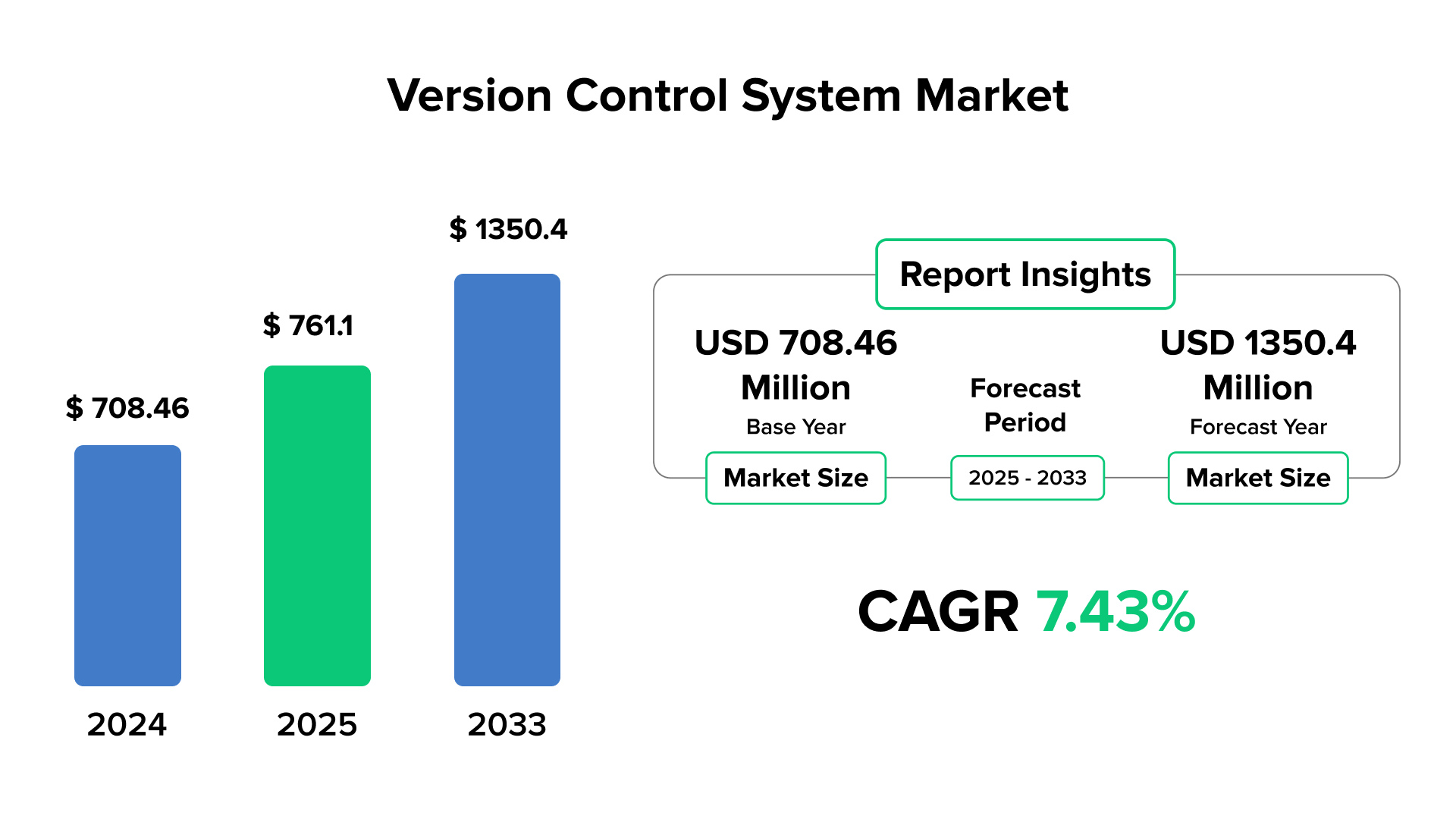
Version control systems have been helping developers manage code changes for over fifty years, and adoption still grows every year. The global VCS market was valued at $708.46 million in 2024 and is projected to reach $761.1 million in 2025, driven by cloud adoption and AI-powered development tools. This article examines the most widely used systems in 2025, based on developer surveys, market trends and statistical data.

Version control systems (VCSs) have been helping developers manage code changes, collaborate efficiently, and maintain a structured history for debugging, rollbacks, and audits for over 50 years. Their adoption continues to grow yearly.
In 2024, the global VCS market was valued at $708.46 million and is projected to reach $761.1 million in 2025, driven by cloud adoption and AI-powered development tools.
This article examines the most widely used VCSs in 2025, based on developer surveys, market trends, and statistical data.
Your Preferred VCS: Developer Trends and Choices
According to Fortune Business Insights, approximately 90% of tech startups rely on version control systems (VCSs) as essential development tools. Additionally, 72% of developers believe that VCSs help reduce development time by up to 30%.
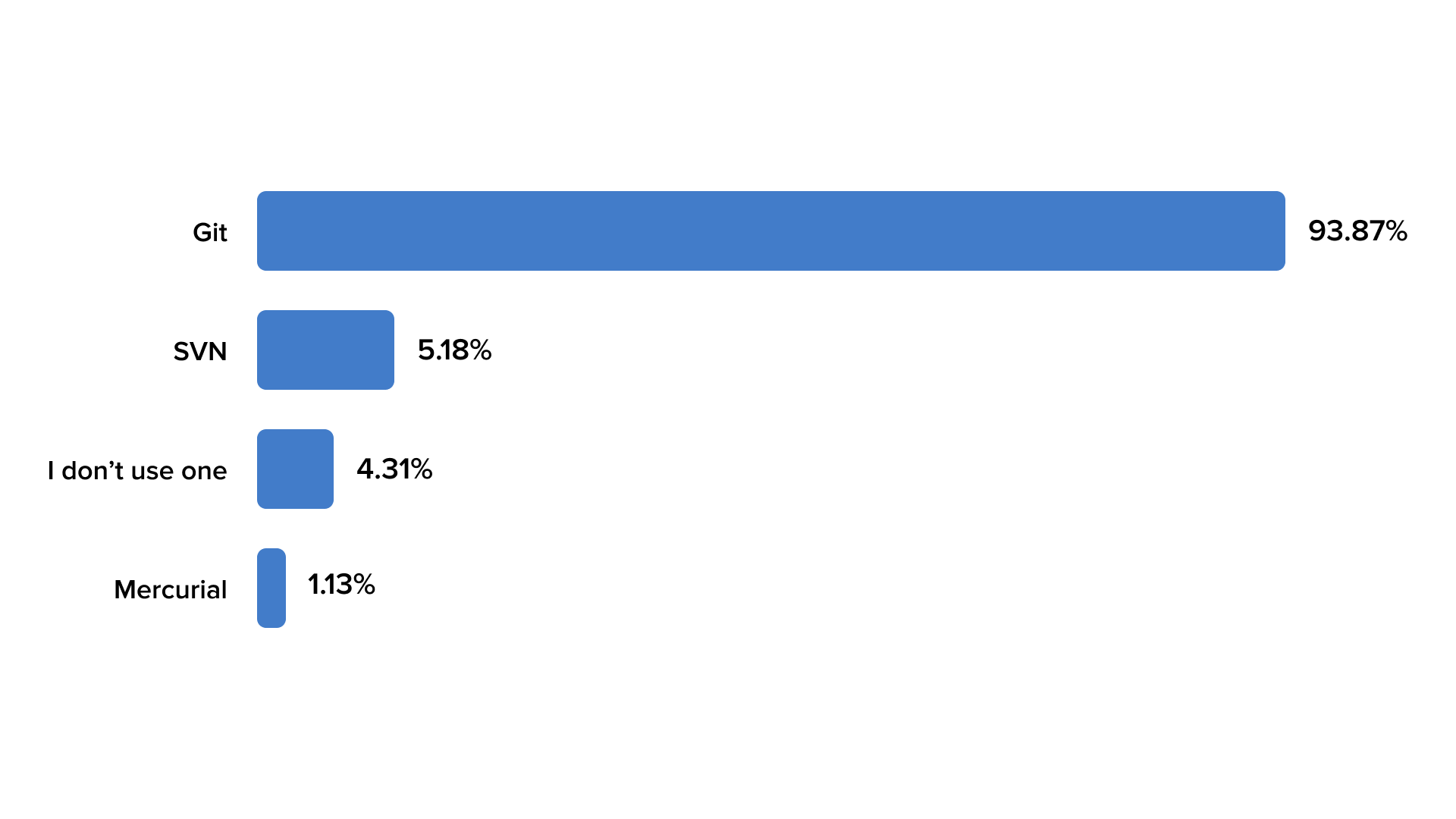
For the past decade, Git has remained the dominant choice among developers. In 2016, 87.1% of developers preferred Git, and by 2025, its usage had risen to 93.87%.
The Stack Overflow Developer Survey ranks version control systems by frequency of use:
- Git – 93.87% adoption
- SVN (Subversion) – 5.18%
- Mercurial – 1.13%
But to demonstrate a bigger picture, we picked 5 Version Control Systems for our investigation - the abovementioned Git, SVN and Mercurial as well as Concurrent Versions System (CVS) and Perforce.
Open the embedded content (cdn.knightlab.com)
Git
Git is a free, distributed version control system that enables efficient collaboration, powering platforms like GitHub and GitLab, which are essential for modern software development, CI/CD, and AI-assisted coding. Since its creation in 2005, it has become the backbone of open-source projects and enterprise DevOps, used by companies like Google, Microsoft, and AI-driven startups in 2025.
Apache Subversion
Apache Subversion (SVN) is a free, centralized version control system that has been in use since 2001, originally designed as a replacement for CVS. While modern alternatives exist, many organizations, including LinkedIn, NASA, Siemens, and Citigroup, continue to rely on SVN due to its structured access control, stability, and ability to manage large binary assets in enterprise, government, and financial sectors.
Mercurial
Mercurial is a free, decentralized source code management system developed in 2005 for high performance, scalability, and simplicity. While less popular than other version control systems, it remains in use by organizations such as Mozilla, Facebook, NGINX, and W3C due to its speed, efficiency with large repositories, and straightforward user experience.
Perforce
Perforce is a commercial, centralized version control system that has been in use since 1995, offering a master server for file versioning accessible via P4 or mirrored to Git repositories. While widely used by companies requiring strict access control and handling large-scale projects, its high licensing costs and lack of decentralization have led many firms to transition to decentralized version control systems (DVCS) for greater flexibility and scalability.
Concurrent Versions System (CVS)
Concurrent Versions System (CVS) is a free, centralized (client-server) revision control system developed in 1990. It was designed to keep track of the file changes. Its active development has effectively stopped in 2008, yet there are few companies still using CVS, mainly because it fulfills their needs and there’s no economically viable reason to migrate their legacy projects.
Google Trends
Turning to Google Trends data is one way to determine a VCS popularity. Google Trends tool allows to compare how many times a particular version control system was searched (i.e., its popularity in Google) relative to the total search volume in the world.
Data source: Google Trends, 2004-present\