6 Best Practices for RhodeCode Enterprise
Learn how to manage 11,000+ repositories with RhodeCode. Expert guide on security, Git/SVN/Hg governance, and Jira integration.

Best practices for organizations and teams using RhodeCode enterprise edition
As software development scales within global organizations, managing source code becomes a challenge of governance, security, and infrastructure stability. When an organization reaches the scale of Thales Group, managing over 11,000 repositories and 1,600 active users - the choice of Source Code Management (SCM) strategy directly impacts the bottom line.
This comprehensive guide outlines the best practices for implementing RhodeCode Enterprise Edition, ensuring your infrastructure remains secure, compliant, and optimized for high-velocity engineering teams.
1. Architectural Governance: Managing Multi-Protocol Environments
Most enterprise SCM tools force a "Git-only" migration. However, reality in large-scale engineering often involves legacy SVN codebases and specialized Mercurial (Hg) workflows. RhodeCode's unique value is its unified interface for all three.
Unified Repository Strategy
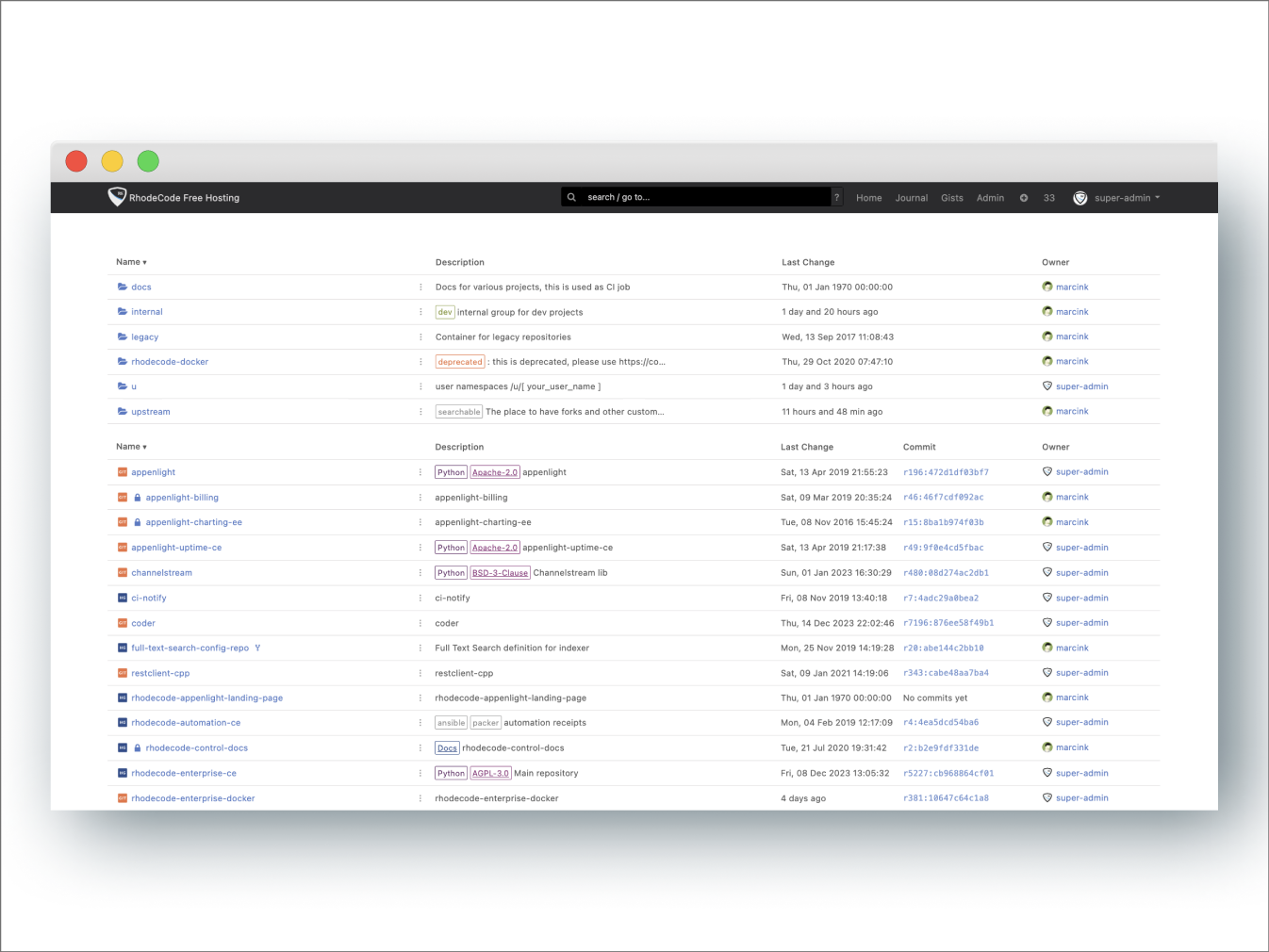
Instead of maintaining fragmented servers for different protocols, centralize all assets within RhodeCode. This eliminates the "silo effect" where teams lose visibility into cross-departmental dependencies.
- Best Practice: Use RhodeCode to proxy and mirror external repositories. This provides a single source of truth for both internal development and external dependencies, reducing the risk of upstream supply chain vulnerabilities.
Hierarchical Grouping and Metadata
With thousands of repositories, flat structures lead to chaos.
- Repository Groups: Implement a nested hierarchy (e.g., Department > Product Line > Component).
- Naming Conventions: Enforce strict naming rules (e.g., project-id_service-name_vcs-type).
- Metadata Usage: Leverage RhodeCode’s ability to add custom descriptions and tags to repositories. This allows non-developer stakeholders, such as compliance officers or project managers, to identify assets without navigating the code.
2. Advanced Security and Compliance Framework
For enterprises, source code is the most valuable intellectual property. RhodeCode Enterprise provides the tools to build a "Zero Trust" approach to code access.
Granular Permission Logic
One of the most critical practices is the implementation of fine-grained access control.
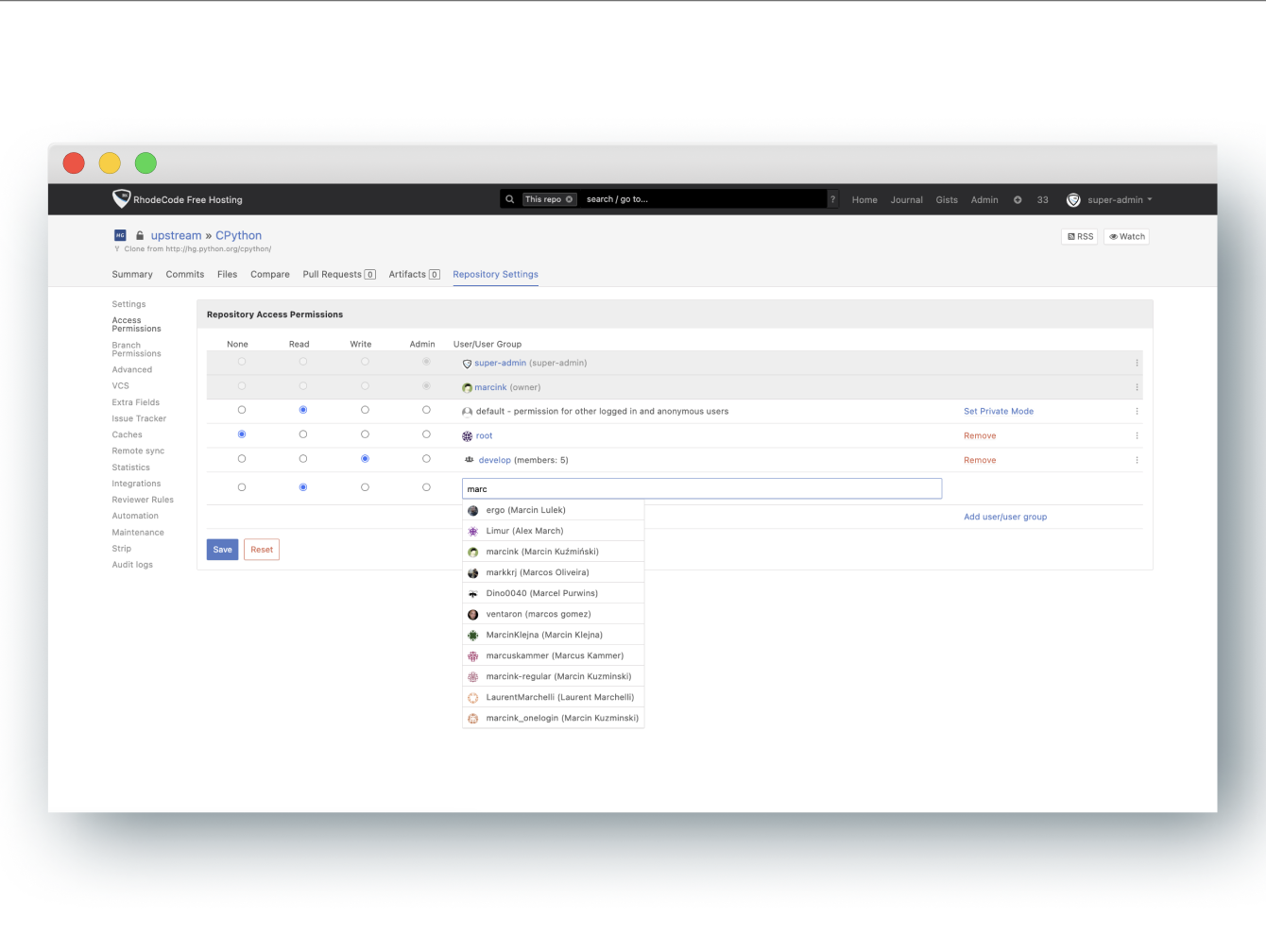
- Branch-Level Security: In a multi-site environment like Thales, not every developer should have push access to the master or production branches. Use RhodeCode to restrict these actions to authorized "Release Leads."
- Inheritance Rules: Set permissions at the Group level to ensure that new repositories automatically inherit the correct security posture. This prevents "security drift" where new projects are accidentally created with over-permissive settings.
IP Whitelisting and Audit Trails
In regulated industries (aerospace, defense, finance), knowing where access comes from is as important as knowing who is accessing it.
- Network Isolation: Use RhodeCode’s IP whitelisting to ensure that even with valid credentials, code cannot be cloned outside of the corporate VPN or specific office locations.
- API-Driven Monitoring: Don't just rely on the UI for audits. Best-in-class organizations use the RhodeCode API to stream access logs into SIEM (Security Information and Event Management) systems for real-time threat detection.
3. Optimizing Global Developer Productivity
Global teams face the "latency tax." RhodeCode helps mitigate this by allowing a more flexible connection model compared to proprietary, server-locked tools.
Handling Bandwidth in Distributed Teams
Thales CDI successfully reduced bandwidth consumption by moving away from tools that required permanent server connections.
- Offline-First Workflows: Encourage the use of Mercurial or Git for teams in regions with unstable connectivity. Since these are distributed systems, developers only need to connect to RhodeCode to push/pull, not for every commit or history check.
- Regional Mirroring: Deploy RhodeCode instances in major hubs (e.g., Singapore, Austin, Europe) and use repository synchronization. This ensures that a developer in Asia isn't waiting minutes to clone a repository hosted in a European data center.
Code Review and Pull Request Culture
A robust Pull Request (PR) workflow is the best defense against technical debt.
- Reviewer Groups: Define mandatory reviewer groups for specific repository paths.
- Atomic Pull Requests: Encourage teams to keep PRs small and focused. RhodeCode’s interface is designed for high-frequency code reviews, which facilitates faster feedback loops.
4. Ecosystem Integration: Building the DevOps Backbone
RhodeCode does not exist in a vacuum. Its efficiency is multiplied when integrated with the broader toolchain.
The Power of Smart Commits
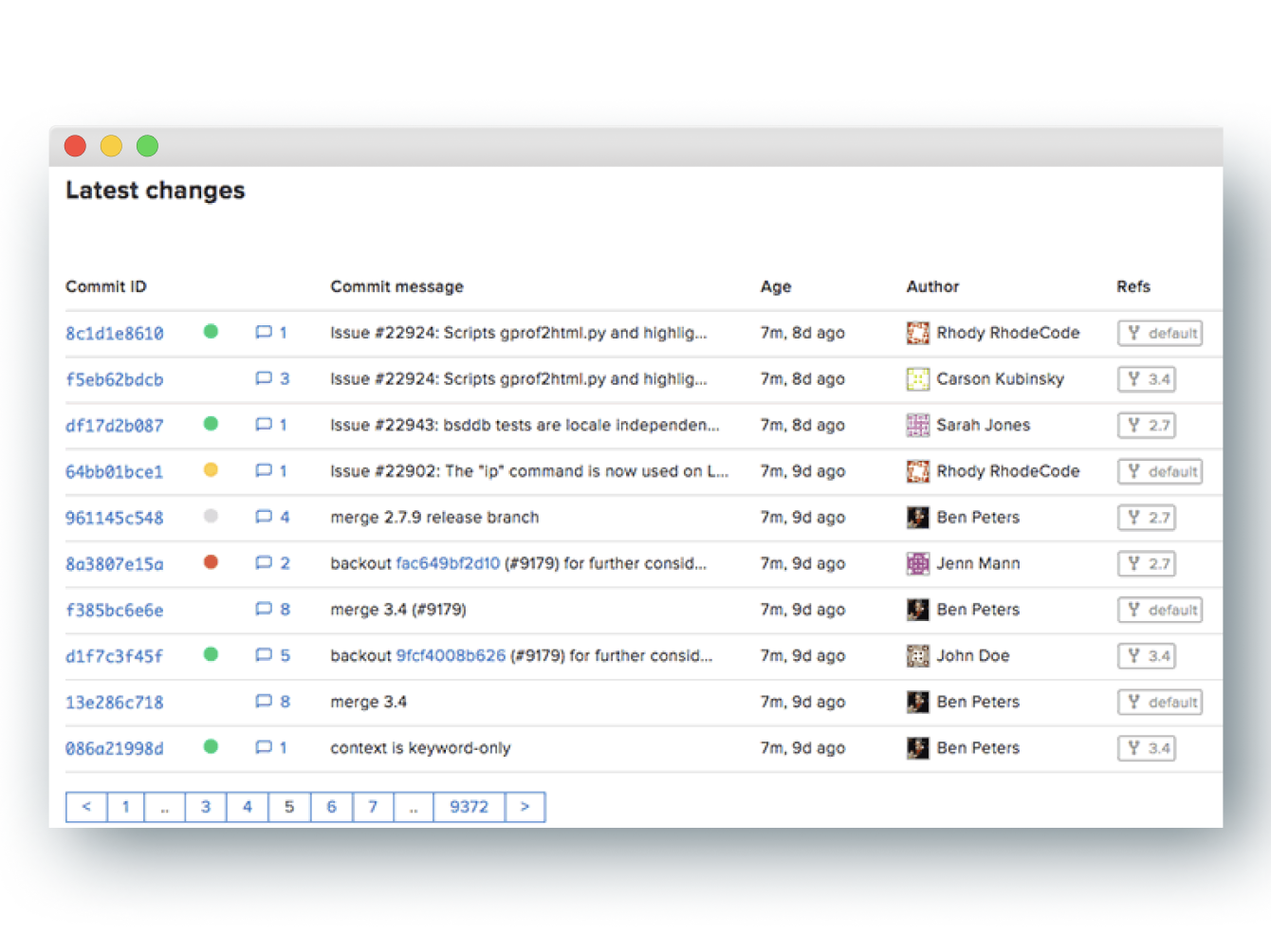
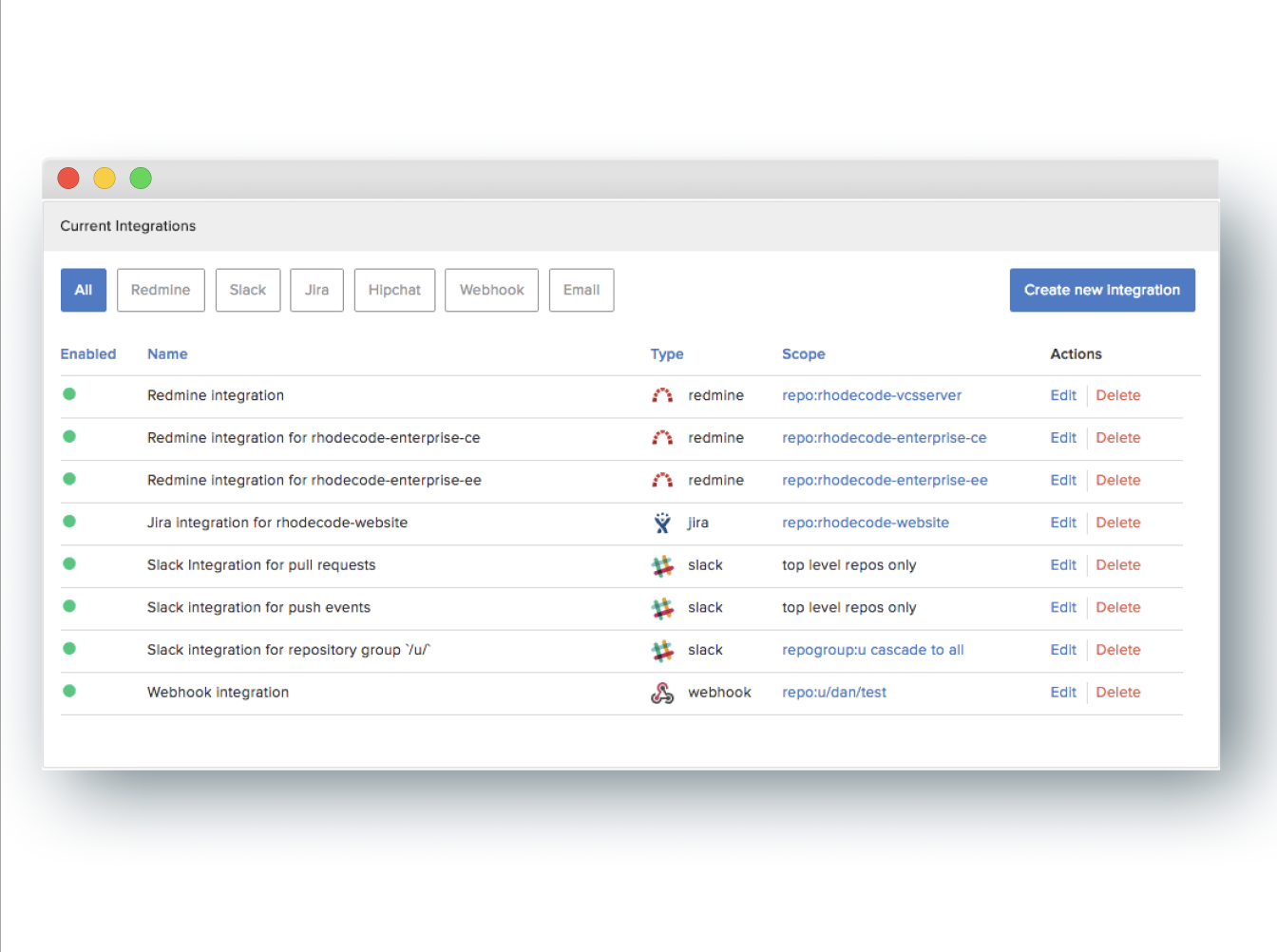
Integrating RhodeCode with Jira or Redmine is a "quick win" for productivity. By using smart commits, developers can trigger actions in the bug tracker directly from the terminal.
- Example: Including refs #1024 fixed in a commit message can automatically move a Jira ticket to "Resolved" and link the specific changeset. This ensures the paper trail for every fix is perfectly preserved for auditors.
CI/CD Pipeline Automation
RhodeCode acts as the trigger for the entire build process.
- Webhooks for Jenkins/TeamCity: Configure webhooks to trigger specialized build agents. For complex projects (like monolithic software or embedded systems), use RhodeCode to notify different build servers based on the branch or repository group.
- Artifact Correlation: Ensure that every build artifact in your repository (like Nexus or Artifactory) is tagged with the RhodeCode commit hash for full traceability from binary back to source code.
5. Scalability and Performance Tuning
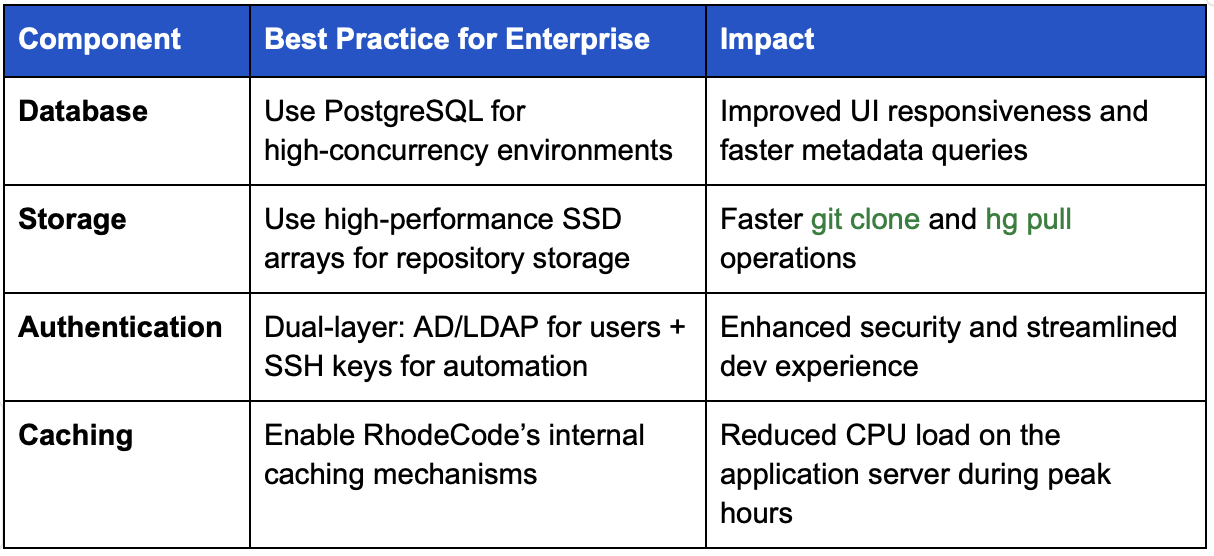
Managing 1,600+ peak users requires careful infrastructure planning.
6. Future-Proofing: Transitioning to RhodeCode 5.0 and Beyond
As the platform evolves, organizations must prepare for the next generation of SCM features.
- Python 3 Migration: Moving to the latest versions of RhodeCode (built on Python 3) provides a significantly faster Web-UI, addressing one of the common pain points in large-scale deployments.
- Integrated CI/CD: While many enterprises use external tools like Jenkins, the move towards integrated CI/CD within RhodeCode offers a more streamlined experience for teams that want to minimize tool sprawl.
- AI and Secret Analysis: Future-looking teams are already exploring the integration of AI assistants for code analysis and automated "secret scanning" (detecting passwords or API keys accidentally committed to the source).
Summary of Success
The transition of a global giant like Thales to RhodeCode demonstrates that with the right governance, an organization can achieve:
- Significant reduction in SCM licensing and maintenance costs.
- Improved developer collaboration across continents.
- Full compliance with the most stringent security audits.
- Flexibility to manage legacy and modern protocols in a single, secure on-premise environment.