What Is Version Control? Definition, Examples, and Benefits
In the modern landscape of digital creation, maintaining order within a complex codebase is a fundamental challenge for every software team. Whether you are a solo developer or part of a global enterprise, the ability to manage changes without losing progress is vital. This is where version control enters the picture. At its core, version control is a systematic approach to recording changes to a file or set of files over time so that you can recall specific versions later.
For companies like RhodeCode, providing robust tools for source code management means ensuring that every developer has a safety net. This technology allows multiple contributors to work on the same project simultaneously without overwriting each other's work. By using a revision control system, organizations can track the entire history of their development process, making it an indispensable part of any DevOps pipeline.
Why Is Version Control Important?
The importance of version control cannot be overstated in a professional development environment. Without a structured system, developers often resort to manual backups, creating folders with names like project_v1 or project_final_v2. This manual method is prone to human error and lacks the granularity needed for complex software tasks.
A dedicated version control workflow provides a single source of truth for the entire codebase. It allows teams to experiment with new features in isolation and provides a reliable mechanism to revert to a previous state if a bug is introduced. Beyond just technical safety, it enhances team collaboration by providing visibility into who made what changes and why. This level of history tracking is essential for security, auditing, and maintaining high-quality software standards across large-scale systems.
How Does Version Control Work?
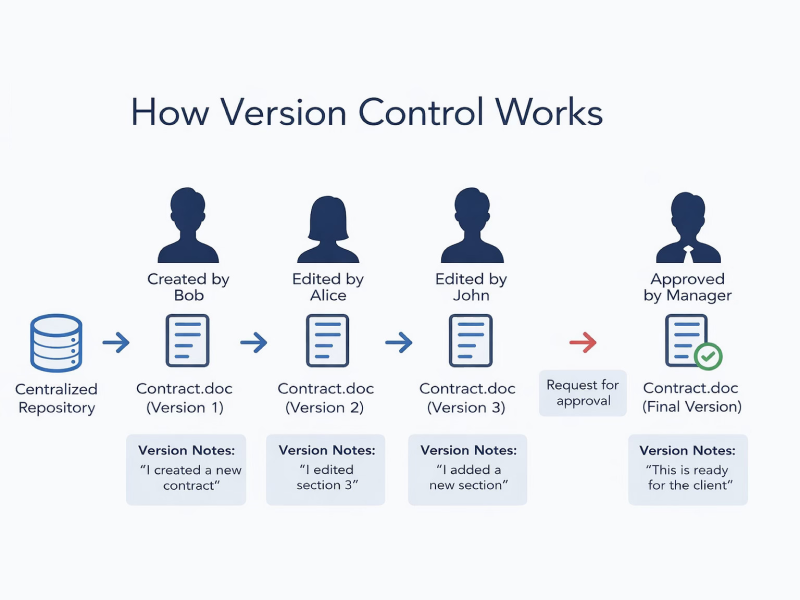
Version control systems operate by tracking every modification made to the code. When a developer makes changes, they commit those changes to a repository. A commit is essentially a snapshot of the files at a specific point in time, accompanied by a description of what was altered.
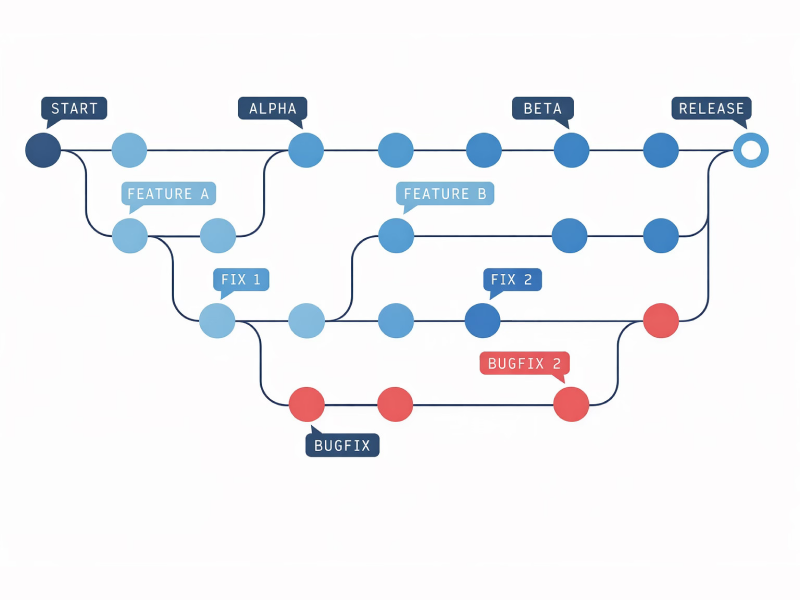
Most modern tools use a branching model. A branch allows a developer to diverge from the main line of development and work independently. Once the new feature or fix is verified, the developer can merge those changes back into the main codebase. This process ensures that the primary production code remains stable while ongoing development continues in parallel. RhodeCode specializes in unifying these workflows, offering support for different protocols to help teams manage their assets efficiently.
Types of Version Control Systems
To choose the right tool for your project, it is essential to understand the different architectures available. While all version control software shares the same goal, the way they handle data storage and user interaction varies significantly.
Local Version Control Systems
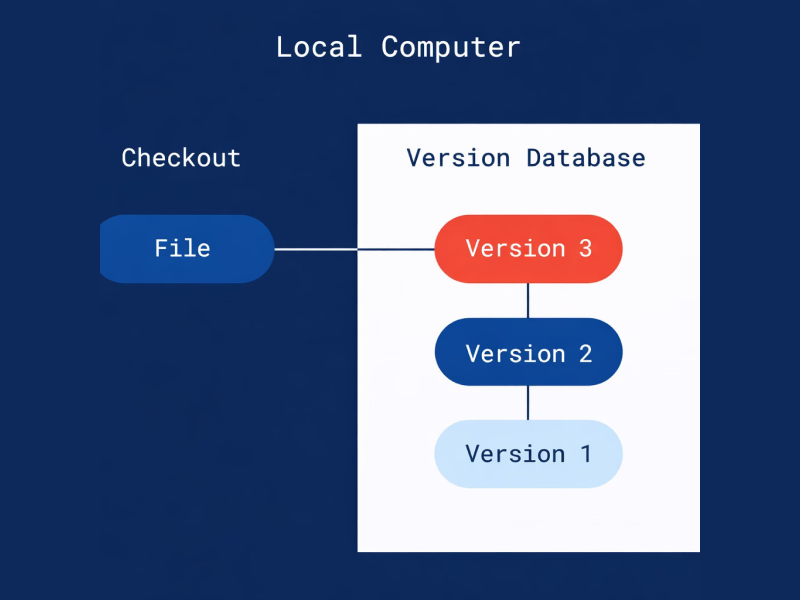
The simplest form of version control is a local system where changes are tracked within a single computer's database. While this is better than no system at all, it has major limitations. Because the data resides only on one machine, it is difficult for teams to collaborate. If the local disk fails or the database is corrupted, the entire version history could be lost. Most developers have moved away from this model in favor of more networked and resilient systems.
Centralized Version Control Systems
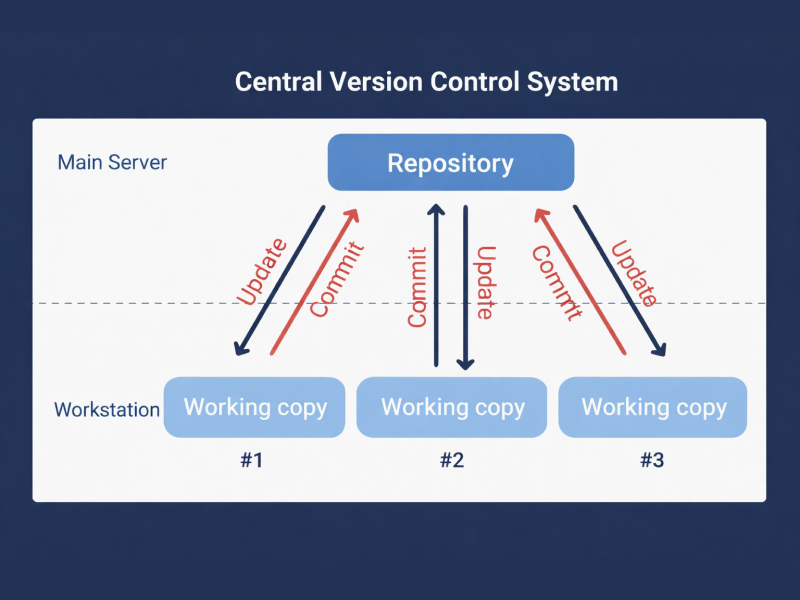
Centralized version control systems (CVCS) were developed to solve the collaboration problem. In this model, a single server contains all the versioned files, and a number of clients check out files from that central place. This allows administrators to have fine-grained control over who can do what.
For many years, this was the standard for team collaboration software. However, the central server represents a single point of failure. If the server goes down for an hour, nobody can collaborate or save versioned changes during that time. If you are looking for a reliable solution, you might explore how to implement an svn version control system to manage legacy projects or specific centralized workflows.
Distributed Version Control Systems (Git)
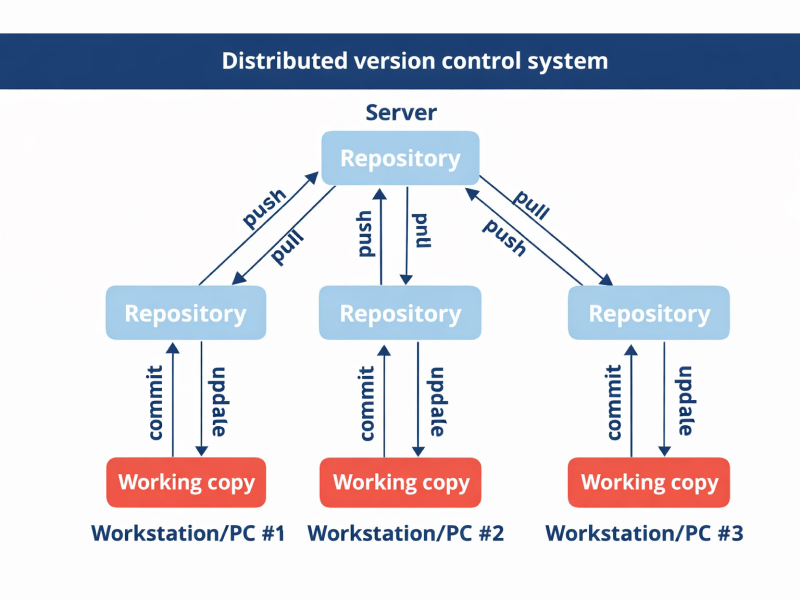
In a distributed version control system (DVCS), every developer has a full copy of the repository, including the entire history of all changes. This means that if the main server dies, any of the client repositories can be restored back to the server to recover the data.
Git is the most popular example of a DVCS. It is highly flexible and allows for complex branching and merging strategies. Because most operations are performed locally, it is incredibly fast. For teams requiring high performance and modern features, using a git version control system is often the preferred choice. RhodeCode provides an enterprise-grade platform that supports these distributed systems while adding layers of security and management.
Version Control for Team Collaboration
In a collaborative environment, version control acts as a communication tool. When multiple contributors are editing the same codebase, the software helps resolve conflicts that arise when two people change the same line of code.
Through collaborative coding tools, developers can perform code reviews, discuss specific lines of logic, and ensure that only peer-reviewed code reaches the production server. This social aspect of development is what allows large open-source projects and enterprise marketing platforms to scale. By using version control best practices, teams can maintain a high velocity without sacrificing the stability of their software.
Benefits of Using Version Control
Implementing a formal system for managing changes offers a wide array of advantages that impact both the technical and business sides of an organization.
- Complete Version History: You can see every change made to the codebase since the project started.
- Branching and Experimentation: Developers can test new ideas without risking the main project.
- Traceability: Every commit is linked to a developer, making it easy to find who to ask about specific logic.
- Recovery: If a mistake is made, you can instantly revert to a known working version.
- Automation: Version control is the foundation of CI/CD, allowing for automated testing and deployment.
Did you know that the first version control systems were developed in the early 1970s? The Source Code Control System (SCCS) was released in 1972, long before the internet as we know it existed, proving that even early developers realized the chaos of unmanaged code.
What is the primary function of a version control system?
The primary function of a version control system is to manage and track changes to source code over time. It provides a structured environment where developers can save versions, collaborate with others, and recover from errors. By using a repository to store data, these systems ensure that the development process is transparent, reversible, and scalable for teams of any size.
For companies looking to secure their intellectual property and streamline their development, RhodeCode offers a powerful solution. Whether you need to manage Git, Subversion, or Mercurial, our platform provides the tools you need to succeed.
Ready to take control of your development process?
Explore how RhodeCode can transform your team collaboration and source code management.
Start your journey with our comprehensive version control tutorial and see why thousands of developers trust us with their most critical assets. Optimize your workflow today.